 Home
 Research
 Conferences
 About
 Contact
Resilience engineering research
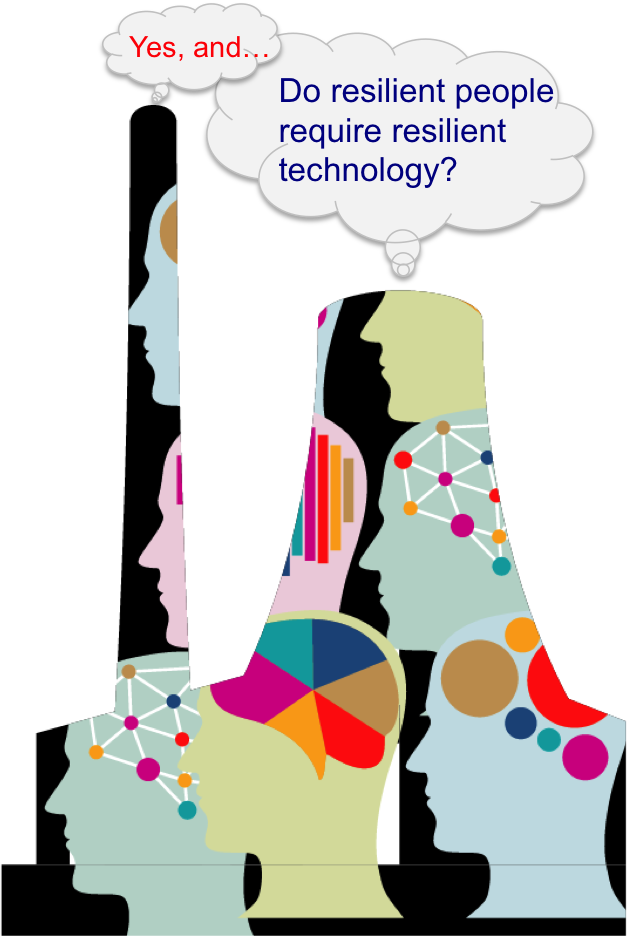
What is a holistic approach to resilience research and why is it important? How do we incorporate the resilience of complex human systems (e.g., people, organizations, and institutions) with the resilience of interdependent infrastructure systems (e.g., energy, water, communications, and transportation systems)? What is social-technical resilience? Does resilient technology require resilient people? These are some of the research questions I am investigating.
Hello and thanks for stopping by. My name is John E. Thomas (a.k.a. Johnny), and I am passionate about contributing to a resilient and sustainable life experience for future generations. As a Professor of Engineering Practice at the University of Colorado Boulder, my research examines the socio-technical dynamics of people who depend on interdependent infrastructures. The work began in his doctoral research at Arizona State University’s School of Sustainable Engineering and the Built Environment and continues in my teaching and writing today. My research is focused on a holistic approach to critical infrastructure resilience and the relationships between human systems (e.g., individuals, groups, organizations, and institutions) interacting with infrastructure systems (e.g., energy, water, transportation, and cybersecurity). I combine concepts from resilience engineering, Integral theory, and psychology literature to investigate the complex socio-technical dynamics of humans interdependent upon infrastructures that are essential to public health, safety, and well-being.
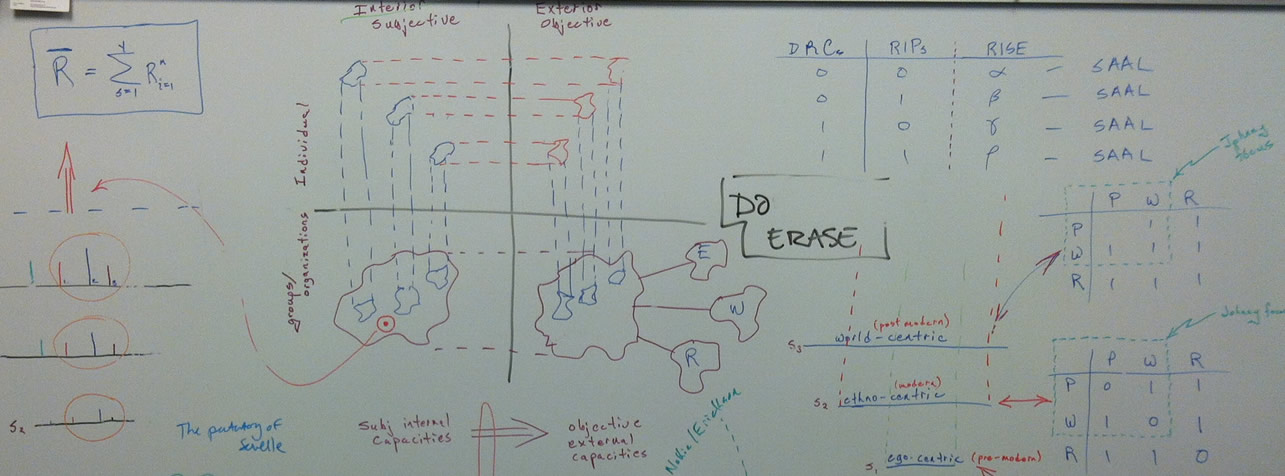
Whereas a traditional approach to engineering resilience is focused on empirical–exterior–technical, process-oriented, and systems solutions, an Integral approach to resilience engineering includes the interior dimensions–subjective and intersubjective–of individual people, groups, organizations, and institutions that correlate with exterior actions, systems behavior, and artifacts. The interior dimensions are the endogenous individual and social psychological structures, shared values, culture, mutual understandings and agreements, tacit knowledge, and world views influencing exogenous–exterior system interactions and outcomes.
Publications
Book Chapters
- Thomas, J. E. (2026, accepted). SETS-RAFT: A social, ecological, and technical system resilience assessment and framework tool. In Crisis Management and Complexity. CRC Press / Taylor & Francis.
- Seager, T. P., Spierre Clark, S., Eisenberg, D. A., Thomas, J. E., et al. (2017). Redesigning resilient infrastructure research. In I. Linkov & J. Palma-Oliveira (Eds.), Resilience and Risk: Methods and Application in Environment, Cyber and Social Domains, Chapter 3. Springer.
- Snell, M. L., Eisenberg, D. A., Seager, T. P., Clark, S. S., Oh, Y. J., Thomas, J. E., & McBurnett, L. R. (2016). A multidimensional review of resilience: Resources, processes, and outcomes. In The International Risk Governance Council Resource Guide on Resilience. IRGC.